REVIEW · KEMER
Kemer: Scuba Diving Experience in Aquarium and Kiris Bays
Book on GetYourGuide →Operated by Yükay Turizm · Bookable on GetYourGuide
Fish at arm’s length in Kemer’s bays. I like how this scuba experience mixes real underwater time in Aquarium Bay and Kiris Bay with a proper start-up lesson before anyone goes under. You get two separate guided sessions—around 5 meters and 10–15 meters—so it’s not just one short attempt and done.
What I also like is the human side: you’re taught how to use the equipment and the routines on the boat, and the instructors guide you in your language—English, German, Russian, or Turkish. One thing to plan around: cameras aren’t allowed, and some people have reported that goggles can be less than perfect for fit, depending on face shape.
In This Review
- Key highlights worth planning for
- Kemer’s Aquarium Bay and Kiris Bay: What’s actually special down there
- A 7-hour rhythm on the water: how the day typically feels
- Your instructors before you go under: safety + comfort in plain language
- First underwater session around 5 meters: a gentle start
- Second underwater session at 10–15 meters, including a Poseidon statue option
- Hand-feeding fish, then snorkeling and swimming: the day stays fun
- Lunch, shade, and boat time: why the non-water portions matter
- Price and value: $29 for two underwater sessions plus lunch
- Getting there: Kemer marina meet-up vs optional pickup
- What to bring (and what to leave at home)
- Who should book this Kemer scuba experience (and who should skip it)
- Should you book this Kemer scuba experience?
- FAQ
- How many underwater sessions are included?
- Do I need a scuba license to join?
- Can non-swimmers join?
- What languages are the instructors available in?
- Where do I meet if I don’t choose hotel pickup?
- Is lunch included, and are drinks included?
- Are cameras allowed?
Key highlights worth planning for
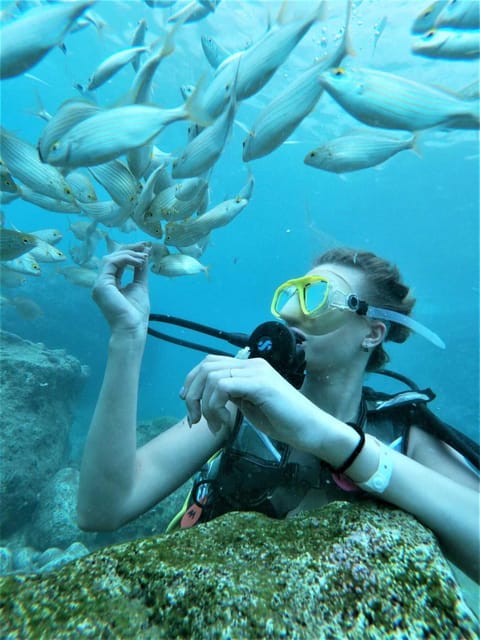
- Two guided underwater sessions: first around 5 meters, then 10–15 meters, each about 20–25 minutes
- Professional instruction before going under: equipment use, safety procedures, and boat routines
- Fish-feeding experience: hand-feeding is part of the concept, with your instructor steering what’s allowed
- Snorkel and swim time: after the underwater parts, you spend the rest of the day on the water
- Lunch included in the price: you won’t be stuck hunting food mid-trip
- Optional round-trip transfer: if you don’t add transfer, you meet at Kemer marina
Kemer’s Aquarium Bay and Kiris Bay: What’s actually special down there
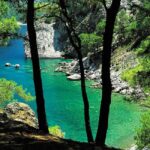
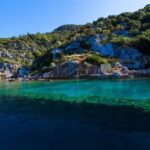
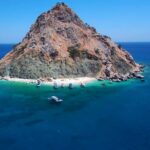
The Kemer coastline has a big advantage: you’re not spending the day traveling far to find good water. This tour focuses on two nearby bays—Aquarium Bay and Kiris Bay—so the day stays efficient and you get more time where it counts: the underwater scenery.
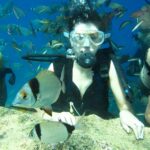
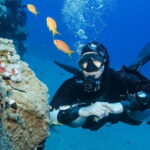
I think the “Aquarium Bay” name is a clue to what you’re after. Expect lots of small, visible sea life and a setting where the fish feel close and active. That’s why the hand-feeding detail matters. When fish gather near the surface, your underwater experience becomes more about watching behavior than just spotting one or two things in the distance.
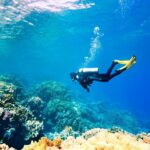
Then comes Kiris Bay, which keeps the mood going: another underwater session, another set of fish and rock-and-sand textures, and a chance to settle into your comfort level. Even if you’re a first-timer, the structure helps because you don’t jump straight to the deepest part.
There’s also value in the way the program selects sites. The team uses the best spots they know for sightings, not random stops. You may not control the exact sea life you’ll see, but you can control what you bring and how you prepare—so the day has a fair chance to feel smooth and rewarding.
You can also read our reviews of more scuba diving tours in Kemer
A 7-hour rhythm on the water: how the day typically feels
This is a 7-hour outing, and the pacing is built around two underwater sessions plus plenty of breaks. The overall rhythm usually looks like:
You start with a briefing and gear setup, then head out by boat to the first bay. The first underwater session is shallow and more about getting comfortable with breathing, buoyancy, and hand signals. After that, you take a breather on the boat—sun time, hydration, and a calm reset—before the second session.
The second underwater session goes deeper, roughly 10–15 meters. That depth is still within the range where many newcomers can do well, but it does require attention to breathing and equalization. That’s why the initial instruction matters.
After the second session, the tour shifts into relaxing mode: you’ll have snorkeling and swimming time in the sea, plus time to hang out on the boat. This matters for value. If you only wanted the underwater part, you could do a shorter trip—here you get enough surface time to make the day feel full.
One practical point: since the tour includes lunch, you don’t need to think about when to find a meal. Still, plan to drink what you can and take shade when you’re on deck, because the Mediterranean sun can be intense even when the water is cool.
Your instructors before you go under: safety + comfort in plain language
If you’re nervous about new gear, this part is the real win. Before any underwater time, the instructors cover how to use the equipment and explain the safety procedures. They also go over boat routines—how things work on board matters because it affects how calm your transition will feel.
I also like that this tour doesn’t treat scuba as a pure skill test. You’re taught what you need in the moment so you can focus on the water, not on guessing what happens next. And you don’t need a dive license. The program is set up for people with no certification.
The instruction team speaks Turkish, German, Russian, and English, which helps a lot if you want to ask questions and get answers you understand. If you’ve ever had “instructions” that were more like noise, you’ll appreciate that you can actually communicate.
One more helpful detail: the tour says even people who can’t swim can join. That doesn’t mean you should be careless. It does mean the safety setup and supervision are designed for comfort—so you can be there for the scenery without feeling like you must be a strong swimmer.
For the best experience, do what you can before the day starts:
- listen closely during the gear and safety talk
- keep your answers short and clear if an instructor asks a question
- tell them immediately if you feel uncomfortable at any step
First underwater session around 5 meters: a gentle start
Your first underwater session is around 5 meters deep and typically lasts 20–25 minutes. That depth is a smart choice because it gives you enough underwater time to see fish and learn the “feel” of scuba without immediately stressing yourself out.
At this stage, your job is mostly simple: breathe steadily, follow hand signals, and keep your body relaxed. When the water is calm and the depth is modest, you have time to notice what’s around you—small fish near the rock edges, sandy patches, and the way light moves underwater.
I also like that this first session is built like a warm-up. It’s not just “try once.” It’s an actual step in a two-part plan. If you do well, you’ll feel confident going into the next session. If you feel a bit off, you’ll have time to adapt with guidance.
You’ll likely spend time focused on learning gear basics and safety routines. That can feel boring for people who came only for the “wow.” But honestly, it’s what makes the deeper session enjoyable instead of stressful.
Second underwater session at 10–15 meters, including a Poseidon statue option
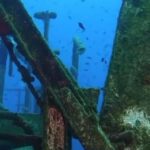
The second session goes deeper: 10–15 meters and again around 20–25 minutes. This is where the experience can feel more dramatic—light changes, visibility can shift, and you’ll usually see different sea-life behavior compared with the first site.
A useful detail from real-world experience with this kind of trip: you may be offered an extra option to go to around -15 meters for a Poseidon statue setting, sometimes for an additional fee (one example mentioned 50 EUR). I wouldn’t plan your day around it, but it’s worth asking about once you’re there, especially if you’re chasing a specific photo moment.
Even without a statue highlight, the second session is valuable because it’s the one that often feels the most “underwater.” The instructors’ guidance becomes especially important at this depth—so keep your attention on their signals and don’t rush.
Depth can also bring small discomforts if you ignore equalization or get anxious. If you’re prone to ear pressure issues, mention it early in the briefing. Getting that sorted before the deeper part helps you enjoy the water instead of fighting your body.

Hand-feeding fish, then snorkeling and swimming: the day stays fun
Feeding fish is one of the tour’s headline features: you can feed fish directly from your hands, which can feel surprisingly personal underwater. There’s also one rule you should note: the program information lists feeding animals as not allowed.
So how do you reconcile that? The safest approach is to assume the hand-feeding is part of a controlled, instructor-supervised moment, and the broader rule is there to prevent unsupervised animal feeding. In practice, you’ll want to follow what your instructor allows—if they provide the right setup and guide you through it, you’ll likely do it that way.
After the two underwater sessions, the tour shifts to snorkeling and swimming time. That’s huge for first-timers, because it gives you a choice: you can keep it relaxed on the surface and enjoy the sea with less pressure than scuba.
You don’t need to be an athlete to enjoy that portion. If you can float and feel comfortable near the surface, you’ll get plenty out of the snorkeling and swim time.
Also, bring your brain out of “scuba mode.” The best part here can be sitting and watching the water around you—the fish sometimes stay active near the surface even after your equipment comes off.
Lunch, shade, and boat time: why the non-water portions matter
This tour includes lunch, which is a big part of why the value works out. You’re out for seven hours, so skipping food would turn the day into a decision about energy instead of enjoyment. Having lunch handled means you can focus on the water.
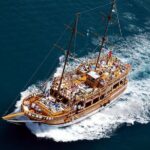
Between sessions, you’ll be on the boat. That boat time isn’t wasted—it’s your chance to recover, dry off, and reset your attention. It’s also where you’ll likely spend most of your time between the structured underwater parts.
Bring or use sunscreen and take breaks in the shade. Even if you’re in the water, deck time builds up quickly. Hat + sunscreen isn’t optional here; it’s the difference between “nice day” and “I’m stuck feeling burned.”
If you’re the kind of person who gets chilled, bring a towel and keep it within reach. You’ll probably dry off between segments, but having your own towel makes the day easier than hunting for what’s available.
One small equipment note from real experiences: some people have said swim goggles didn’t fit well or weren’t ideal. If you have a hard time with fit in general, mention it right away during gear setup so they can adjust what they can.
Price and value: $29 for two underwater sessions plus lunch
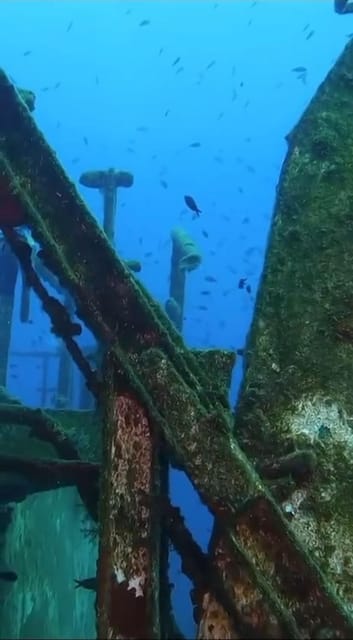
At about $29 per person, this is one of those prices that makes sense only if you’re getting the core components: two underwater sessions, professional instruction, diving equipment, and lunch.
Here’s how I’d think about value:
- Two underwater sessions mean you’re not paying for a quick attempt.
- Equipment and instruction included means you don’t need to rent extra gear or pay for separate coaching.
- Lunch included reduces hidden costs mid-day.
What’s not included is also clear: drinks aren’t included, and photos/videos aren’t included. Photos can be a tricky category because some trips have an onboard photographer who produces images for sale. If you want that option, ask, but don’t assume it’s included.
One more value point: round-trip transfer is optional. If you’re staying near the marina, you might skip it and simply meet at Kemer marina. If you’re farther out, transfer can be worth it because it removes one stressful part of the day—finding the right meeting time and getting there on schedule.
Booking flexibility is built into the offer style (free cancellation up to 24 hours before and a reserve-now option). If you’re deciding between a few days of water activities, that flexibility helps you pick the calmest sea conditions.
Getting there: Kemer marina meet-up vs optional pickup
In the version without transfer, you’re welcomed at Kemer marina. That’s actually good if you like knowing exactly where you need to be and you don’t want to wait for a pickup route.
If you add optional pickup, you’ll be asked to be outside your hotel about 5 minutes before pickup. They’ll tell you the exact pickup time after booking.
Either way, do yourself a favor: show up early enough to breathe. When you’re dealing with gear setup and instructions, being rushed makes everything harder.
Also, plan to coordinate in daylight. Kemer’s marina area is straightforward, but you don’t want to arrive hungry, tired, or confused. You’ll have a much better time once you’re settled and can focus on the briefing.
What to bring (and what to leave at home)
This tour gives you equipment, but you still need your basics. Bring:
- Swimwear
- Towel
- Hat
- Sunscreen
What not to bring:
- cameras (including professional cameras and waterproof cameras)
That camera rule is more strict than you might expect. If you rely on your phone for photos, you may need to plan for a camera-free day or confirm what’s possible during the tour. I’d treat it as a no-cameras requirement and accept that you’ll experience the scenery without recording everything.
Also, follow the animal-feeding rules closely. The program concept includes hand-feeding, but the rules still say feeding animals isn’t allowed—so you’ll want to do exactly what your instructor says.
If you wear prescription gear, ask about what you need for setup. The tour data doesn’t list special requirements, so don’t assume. Get clarity before you go under.
Who should book this Kemer scuba experience (and who should skip it)
This tour is a good fit if you:
- want two underwater sessions, not one
- like structured instruction for comfort and safety
- enjoy coastal scenery and fish watching
- want a full day on the water, including snorkeling and swim time
- value lunch included and a straightforward price
It’s also friendly for beginners in an important way: the tour doesn’t require a dive license, and it’s open to people who can’t swim.
There are limits. It’s not suitable for people with heart problems. If you have any medical concerns, talk to your doctor first and then confirm with the tour team. Better to check than to guess.
If you’re especially sensitive to ear pressure or feel anxious underwater, tell your instructor during the briefing so they can guide you on what to focus on during the deeper session.
Should you book this Kemer scuba experience?
If you want a memorable day on Turkey’s Mediterranean coast without spending a fortune, I think this is a strong choice. The biggest reasons are practical: two guided underwater sessions, equipment and instruction included, and a full seven-hour schedule that doesn’t end when the scuba part ends. Add snorkeling and swimming time, and the trip feels like a real outing, not a rushed checkmark.
I’d book it if you can handle a camera-free experience and you’re comfortable following safety rules closely. If goggles fit you poorly in general, arrive ready to adjust during setup and speak up immediately.
And if you’re deciding between staying on the beach versus spending the day on the water, this offers a clear upgrade: you get to see the sea life in a guided, structured way while still enjoying plenty of relaxation. Provider-wise, this is run by Yükay Turizm, and the program is built around professional instruction and well-chosen bay sites.
FAQ
How many underwater sessions are included?
You get 2 underwater sessions. The first is about 5 meters deep, and the second is about 10–15 meters deep. Each session lasts roughly 20–25 minutes.
Do I need a scuba license to join?
No scuba license is required for this tour.
Can non-swimmers join?
Yes. The tour states that even people who cannot swim can join.
What languages are the instructors available in?
The instructor team speaks Turkish, German, Russian, and English.
Where do I meet if I don’t choose hotel pickup?
If you don’t select transfer, you’ll meet at Kemer marina.
Is lunch included, and are drinks included?
Lunch is included. Drinks are not included.
Are cameras allowed?
No. Cameras, professional cameras, and waterproof cameras are not allowed.
You Might Also Enjoy

More Scuba Diving Tours in Kemer
More Tour Reviews in Kemer
- Suluada Boat Tour From Antalya (Maldives of Turkey) with Lunch & Hotel Transfer
★ 4.5 · 2,300 reviews