REVIEW · ANTALYA
Full Day Perge Aspendos Apollo Temple Tour in Antalya
Book on Viator →Operated by charito · Bookable on Viator
Seven hours of ruins and fresh air. This full-day circuit is built for people who want big-picture ancient sites without getting buried in planning, moving through Perge, Aspendos, and Side with a guide, then ending at Manavgat Waterfall for a quick breather. You’ll get a Roman-and-Greek themed day where the same streets, theaters, and temples you’ve seen in photos actually make sense when someone points out what you’re looking at.
Two things I especially like are the tight small-group feel (around 17 people) and the hands-on guiding: when the guidance is led by Fatima, the stops don’t feel like a checklist. A day like this is also practical—hotel pickup, air-conditioned transport, and lunch included—so you spend less time wrangling and more time actually seeing.
One possible drawback: the biggest ancient sites at Perge and Aspendos require separate entrance tickets, and drinks cost extra. If you hate paying “extras” mid-day, budget for those up front.
In This Review
- Key highlights you’ll care about
- A day loop through Perge, Aspendos, Side, and Manavgat
- Perge Antik Kenti: Roman baths, theaters, and aqueduct logic
- Aspendos Ruins: when the theater does the talking
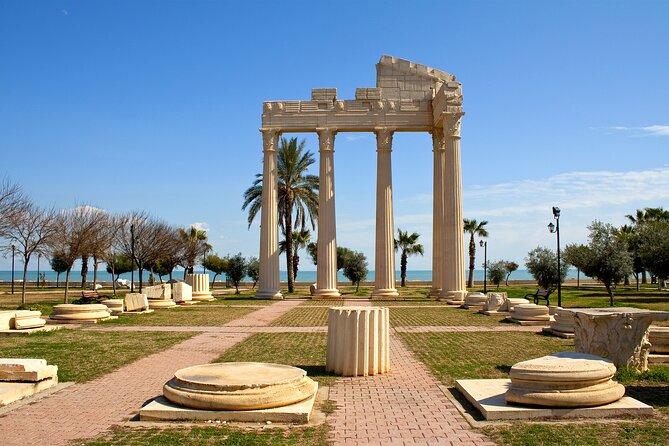
- Side Antik Kenti: Apollo Temple, old port, and temple-photo balance
- Manavgat Waterfall: the day’s reset button
- Price and value: what $65.09 really covers
- Timing and logistics: pickup, travel time, and staying sane
- Who should book this tour, and who might not
- Should you book the Perge Aspendos Apollo Temple tour?
- FAQ
- How long is the tour?
- What’s included in the price?
- Which languages is the tour offered in?
- Are entrance tickets included for Perge and Aspendos?
- Do we pay for drinks during the tour?
- Is free cancellation available?
Key highlights you’ll care about
- Small group size (around 17, max 16) keeps the day from feeling like a cattle call
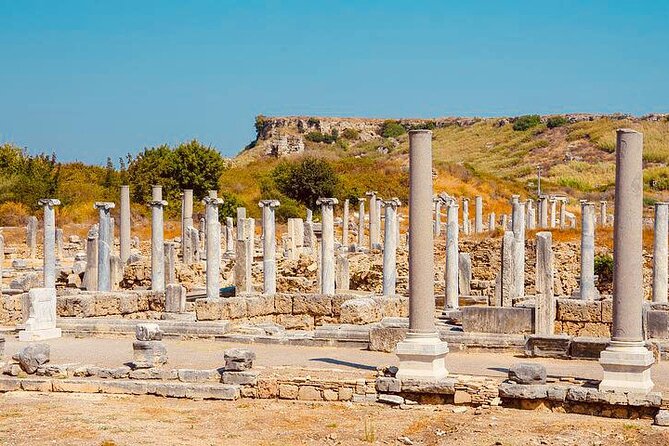
- Perge’s Roman streetscape: baths, temples, aqueducts, theater, and market area in one guided sweep
- Aspendos theater acoustics: the space is famous for how sound carries, and you’ll see why
- Side’s photo-and-temple mix: Apollo Temple area, old port, and Athena-linked sights
- Manavgat Waterfall included time: a 45-minute reset before you head back to Antalya
- Hotel pickup with scheduled timing from central Antalya, plus extra vehicle cost if you’re far out
A day loop through Perge, Aspendos, Side, and Manavgat
This tour is a classic Southern Anatolia combo. You’re not just visiting one “headline” ruin. You’re seeing how ancient life moved—cities, theaters, temples, and waterways—then finishing with the sort of natural pause your legs will appreciate.
The day is about 7 to 8 hours total, and that includes the driving time between stops. That matters because it changes how you experience each site. You get enough time to walk, pause for photos, and listen to the guide, but you’re not drifting for hours on your own. It’s a structured route.
Transport is also part of the value. You ride in an air-conditioned vehicle, with hotel pickup and drop-off. If you’re staying in central Antalya, you’re picked up from your hotel. If you’re farther out, you may be picked up by a second vehicle and you pay an extra fee (your pickup time is scheduled based on your location). That setup is handy because it reduces the “where exactly is my stop?” stress that can come with day trips.
Most of the time, the real difference between a good and an average ruins day is the guide. Here, that’s a major strength. One guest highlighted Fatima for both organization and explanation, and another mentioned the driver—also named Fatima—keeping things professional and smooth. When both the driving and the storytelling are on point, you notice it right away: the sites feel clearer instead of just old stones.
You can also read our reviews of more tours and experiences in Antalya


Perge Antik Kenti: Roman baths, theaters, and aqueduct logic
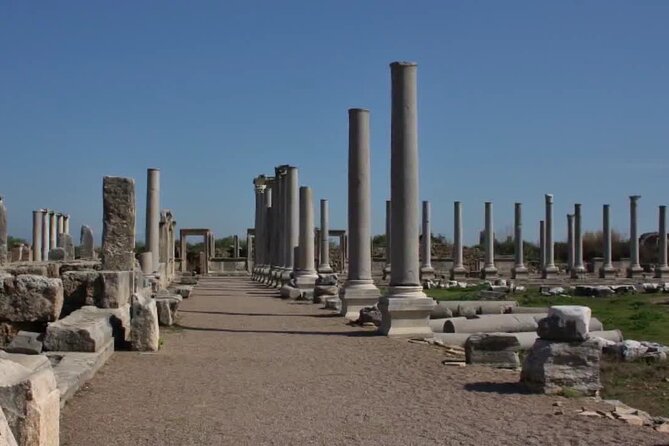
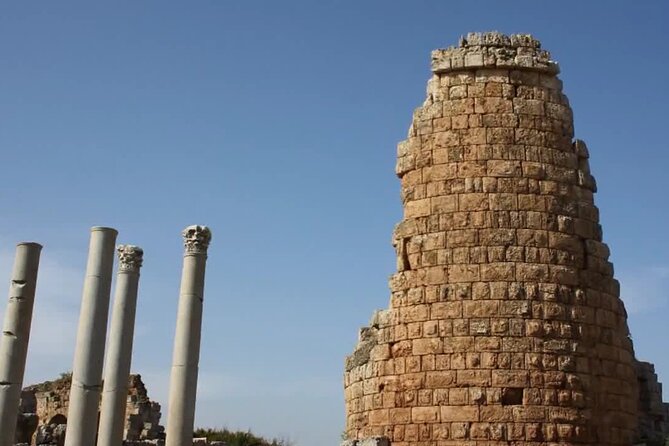
Perge Antik Kenti is the first big hit, and it’s a smart opening. You start with a city that helps you understand Roman life in a very grounded way—what people built, how they moved, and where daily culture happened.
Your stop here runs about 2 hours. Admission is not included, with the Perge entrance ticket listed at 11 euros. So yes, you’ll likely pay at entry (or plan money for it before you go). But you’re paying for a guided look at a site that covers multiple layers: Roman-era objects and also Greek and Hellenistic context.
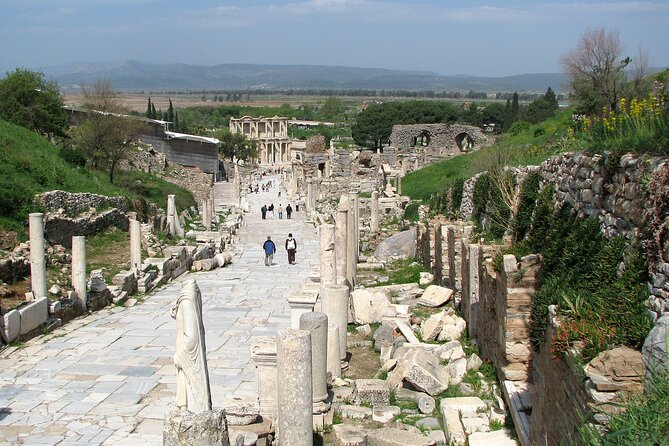
What’s worth your attention at Perge is how many different “city functions” you’ll see in a short time. The guided route includes Roman baths, temples, aqueducts, a theater, and the market area. That mix matters because it helps you stop thinking of ruins as scattered monuments. Instead, you start spotting patterns: water systems and public space, ceremonial buildings and entertainment.
Practical note: a guided Perge stop often works best if you wear shoes that handle uneven ground. The experience is built around walking, plus stopping for explanation. You don’t need hiking gear, but you do want grip.
The other practical advantage of starting at Perge is energy management. You begin earlier in the day (relative to your schedule), so the walking feels easier. By the time you get to the later stops, you’ll already know what to look for—courtyards, theater scale, and the way major streets frame daily life.
Aspendos Ruins: when the theater does the talking
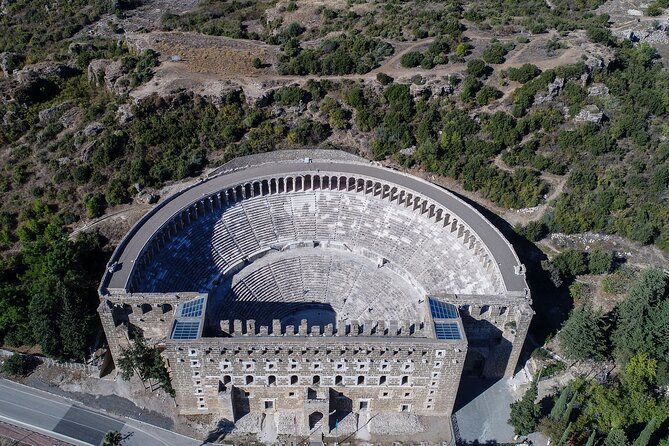
If Perge teaches you how a Roman city “worked,” Aspendos shows you how ancient Romans staged drama. Your Aspendos stop is about 1 hour, and admission is not included. The Aspendos entrance ticket is listed at 15 euros.
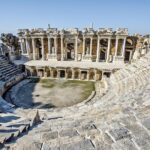
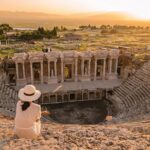
Aspendos is famous for its theater, and the tour makes sure you focus on why. You’re not just looking at seats. You’re seeing a place where acoustic sound design is excellent. In plain terms: you can understand how people in the ancient world could hear performances without modern amplification.
The guide also ties the space to entertainment culture, including references to gladiator battles as part of what the ancient Romans showed in this setting. Even if you don’t know the details beforehand, this kind of guided context helps your brain connect the “big empty structure” you’re looking at with the human events that once happened there.
One caution: an hour moves quickly when you’re standing, listening, and taking photos. If you’re the type who likes to linger for 30 minutes on one corner, you’ll still enjoy Aspendos, but you may have to prioritize. On a packed day, you’ll do best if you treat each stop as a “best of” visit rather than a slow archaeological stroll.
Side Antik Kenti: Apollo Temple, old port, and temple-photo balance
Side is your third major site, and it’s timed at 1 hour 20 minutes. Admission is not included for Side sites on this itinerary, so keep that in mind. The tour focuses on the areas that most often create the strongest first impressions: the Temple of Apollo, the old port, and Temple of Athena-linked sights.
What I like about this stop is the balance between big monuments and more atmospheric spaces. The Temple of Apollo area gives you the classic postcard feel—columns and dramatic angles that make it easy to visualize a sacred setting. The old port adds a different mood: you see how a city’s life connected to trade and movement, not just ceremonies. And the Athena portion gives you another anchor point so Side isn’t just one temple, but a web of civic and religious references.
Side is also a great stop for photos. You’ll likely want to spend a little extra time framing shots—especially around the port context, where you get different sightlines than you do at the theater or in the bath-and-aqueduct world of Perge.
The tradeoff is that you’re still inside a guided route, so you won’t have unlimited freedom to roam. That’s not a negative; it’s just the reality of a day tour that covers four stops. If you want to do serious wandering, you might save that for a separate half-day return later. For a first visit, though, Side hits the key areas.
Manavgat Waterfall: the day’s reset button
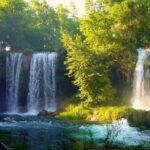
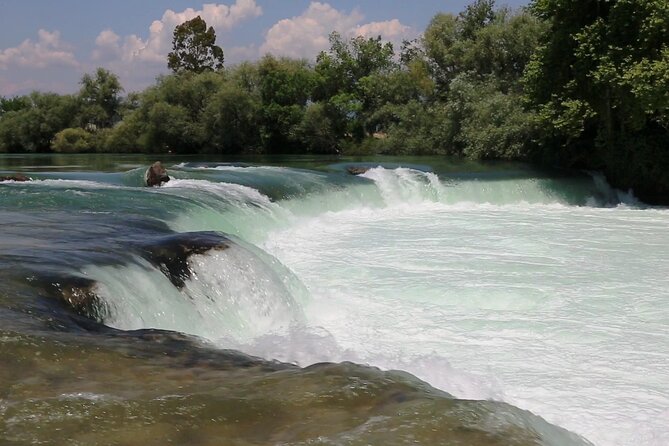
After three ancient stops, you need a break—and the itinerary gives you one. The Manavgat Waterfall stop is about 45 minutes, with admission included.
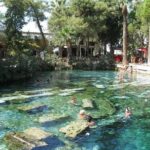
This portion is straightforward: take souvenir photos, walk around for a bit, and let the day cool down. After hours of sun, stone, and tight walking routes, a waterfall stop works like a pressure release. Even if you’re not a hardcore nature person, you’ll enjoy the contrast.
You’ll also appreciate the rhythm. The day ends with something you don’t need to “learn.” The guide time is likely focused on logistics and context, but at this stop, you mainly just get to be there and enjoy the air.
If you’re planning your day, this is the part where it helps to have water and patience. Your feet will tell you when you’ve had enough. Forty-five minutes is enough to get your photos and feel refreshed without turning the finale into another marathon.






Price and value: what $65.09 really covers
At $65.09 per person, this tour is priced in a way that usually makes sense for people who want guided value without paying for everything separately.
Here’s what’s included:
- Lunch
- Guideing service
- Air-conditioned vehicle
- Pick up and drop of hotel or address
It’s also structured for a small group (around 17 people, max 16), and that helps the day feel organized instead of rushed.
What’s not included:
- Perge entrance ticket (11 euros)
- Aspendos entrance ticket (15 euros)
- Side admission ticket (not included, but exact cost isn’t listed)
- Drinks: around 5 euros each
So, the real value question is: does paying separate entrance fees still feel worth it? For most people, yes—because the guided time at Perge and Aspendos is built around the sites’ standout features (baths/aqueduct logic at Perge, acoustic theater at Aspendos). You aren’t just buying access. You’re paying for a guided route that helps you see the connections.
One more value note: the tour includes Manavgat Waterfall admission. That’s a nice bonus because it’s one less thing you have to budget separately for the afternoon.
If you’re traveling as a couple or small group and you’re the type who likes clear explanations, this price generally feels fair. If you’re on a super-tight budget and you want to minimize extra ticket costs, you’ll want to plan your entrance money ahead.
Timing and logistics: pickup, travel time, and staying sane
The biggest practical win here is the pickup. If you’re in central Antalya, you start with hotel pickup and end with hotel drop-off. That saves you from dealing with buses, taxis, and the kind of schedule confusion that ruins a day.
If you’re outside the center, you may be picked up by a second vehicle and you pay extra. The company schedules your pickup time based on where you’re staying, which helps keep you from waiting forever.
Because the tour duration includes travel time between attractions, you should treat the day as a full block rather than piecemeal options. You’ll want to eat breakfast and maybe bring small snacks if that’s your habit. Lunch is included, but the day still has a “moving timeline” feel.
The tour also uses a mobile ticket, which is convenient. You don’t need complicated paper paperwork once you’re ready to go.
Finally, group size matters for logistics. With a maximum of 16 travelers, the pace tends to stay manageable. In places like theaters and temple ruins, too-large groups can turn the experience into bottlenecks. Here, your odds are better that you’ll be able to move and see without constant stopping.
Who should book this tour, and who might not
This tour is a good match if you want:
- A guided day across multiple major sites in Antalya’s region
- A balance of Roman and Greek-era context (Perge and Side do a lot of the teaching)
- The best-known stop at Aspendos Theater, where acoustics are the point
- A natural landing spot at Manavgat Waterfall after the ruins
It’s also ideal if you like the “organized day” style. You’ll get the AC vehicle, pickup/drop-off, and lunch, which makes the day easier than doing it on your own.
It may be less ideal if:
- You hate paying entrance fees on top of a tour price
- You want lots of independent wandering time at each ruin
- You’re sensitive to a structured, multi-stop schedule
One more gentle thought: if you’re a first-timer to this part of Antalya, the order is helpful. You start with Perge’s city layout, then theater culture at Aspendos, then Side’s temples and port atmosphere, then you end with the waterfall.
Should you book the Perge Aspendos Apollo Temple tour?
Yes, with smart planning.
If you want a guided, well-paced day that hits Perge, Aspendos, Side, and Manavgat Waterfall without the stress of renting a car, this is a solid way to spend your time. The small-group size, included lunch, and pickup/drop-off add up to real convenience value. And the guide experience—highlighted by Fatima for explanation and organization—makes the ruins feel more like a story and less like random stones.
Just budget for the separate entrances at Perge (11 euros) and Aspendos (15 euros), remember Side admissions are not included, and plan for drinks (around 5 euros each). If you can handle that, you’ll likely come away feeling like you used the day well.
FAQ
How long is the tour?
The full day tour runs about 7 to 8 hours, and that includes travel time between the attractions.
What’s included in the price?
The price includes lunch, guideing service, an air-conditioned vehicle, and hotel (or address) pickup and drop-off.
Which languages is the tour offered in?
The tour is offered in English.
Are entrance tickets included for Perge and Aspendos?
No. Perge entrance ticket (11 euros) and Aspendos entrance ticket (15 euros) are not included.
Do we pay for drinks during the tour?
Yes. Drinks are not included, and they are around 5 euros each.
Is free cancellation available?
Yes. You can cancel up to 24 hours in advance for a full refund.