REVIEW · ANTALYA
Explore The Old Town With Local Taste
Book on Viator →Operated by Antalya Local Guide · Bookable on Viator
Clock towers, secret lanes, and sweet halva. This tour strings together Antalya’s Old Town in Kaleiçi, mixing sightseeing with photo stops and a final taste of Ottoman-style dessert. You’ll cover the main historic beats without feeling rushed.
Two things I really like: the small group size (max 15, and it often feels even smaller in practice), and the guide, Önder (spelled Önder/Onder/Oner in different notes), who shares stories with clear English and a fun sense of humor. The best part for many people is how the route also helps you get oriented fast—where the harbor, stairs, and viewpoints fit together.
One consideration: you’re walking for about 2.5–3 hours, so you’ll want comfortable shoes and a slow-and-steady mindset. The route also depends on good weather, and you’ll be outside for most of the experience—Antalya can be hot, especially later in the day.
In This Review
- Key takeaways before you go
- Why this Kaleiçi walk is worth $26.96
- Finding the group: Clock Tower start and Hadrian’s Gate finish
- Stop 1: Saat Kulesi and the first look at Kaleiçi’s story
- Stop 2: Yivli Minaret (Yivliminare Cami) and its fluted geometry
- Stop 3: Walking from Yivli to Karatay Madrasah
- Stop 4: Kırkmerdiven Sokak and the Forty Stairs shortcut
- Stop 5: Kaleiçi Marina and ancient harbor walls
- Stop 6: Mermerli Beach for that classic Old Town viewpoint
- Stop 7: Antalya Ethnografya Muzesi and Ottoman daily life in rooms
- Stop 8: Kecili Park for harbor views and a quick balcony moment
- Stop 9: Hıdırlık Tower—Roman-era watchtower on city walls
- Stop 10: Hesapçı Sokak—narrow lanes with fruit trees and jasmine
- Stop 11: Milklaç Işıklar halva tasting and the sweet finish
- The Önder factor: why this tour feels personal
- Timing, weather, and what to do before and after
- Who this tour is best for (and who should skip it)
- Should you book this Old Town tour?
- FAQ
- What is the tour length?
- Where does the tour start and end?
- Is the tour in English?
- What’s included in the price?
- Is the museum included, and is admission free?
- What happens if bad weather cancels the tour?
Key takeaways before you go
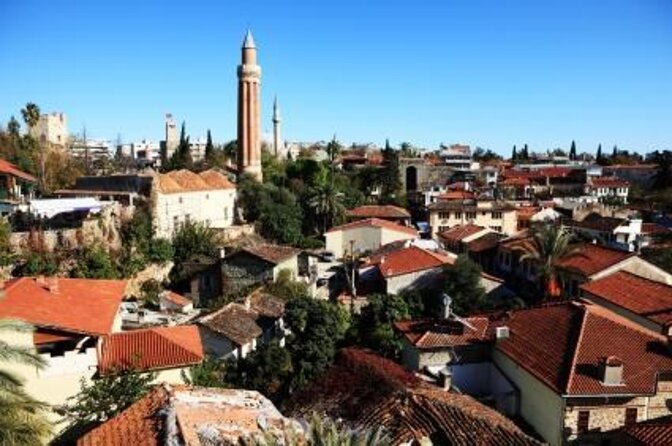
- Guided orientation: you’ll learn the layout of Kaleiçi so your self-guided wandering feels easier afterward.
- Photo stops with variety: famous spots plus quieter corners for better angles.
- Yivli Minaret + Roman-era Hıdırlık Tower: the highlights span centuries without getting heavy.
- Antalya Ethnography Museum: Ottoman daily life shown through rooms and animations.
- A real local finish: semolina halva tasting (served with ice cream, tahini, and peanut).
Why this Kaleiçi walk is worth $26.96

At $26.96 per person, the value is less about “how many tickets you buy” and more about how efficiently the time is used. You get a focused route through the Old Town highlights—then a museum stop—and you end with a proper local dessert tasting. Most of the key sights along the way don’t require extra admissions for you, and the tour’s structure keeps you from bouncing around the neighborhood looking for the next landmark.
The pacing also matters. A tour like this can easily turn into a speed-walk, but this one is built around a relaxed group flow. That’s not just nice; it’s practical. In narrow streets and between viewpoints, you want time for photos, quick questions, and catching your breath.
You can also read our reviews of more tours and experiences in Antalya.

Finding the group: Clock Tower start and Hadrian’s Gate finish
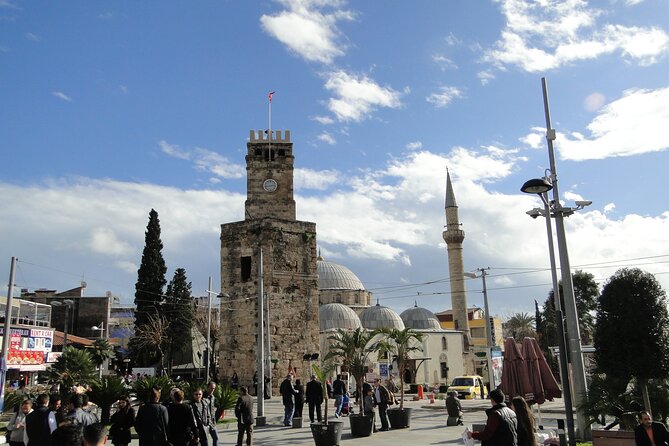
The tour starts at Antalya Clock Tower (Saat Kulesi) at Tuzcular, İmaret Sk., 07100 Muratpaşa, Antalya. The start time is 4:00 pm, which is handy if you want daylight views and a calmer vibe after the hardest heat of the day.
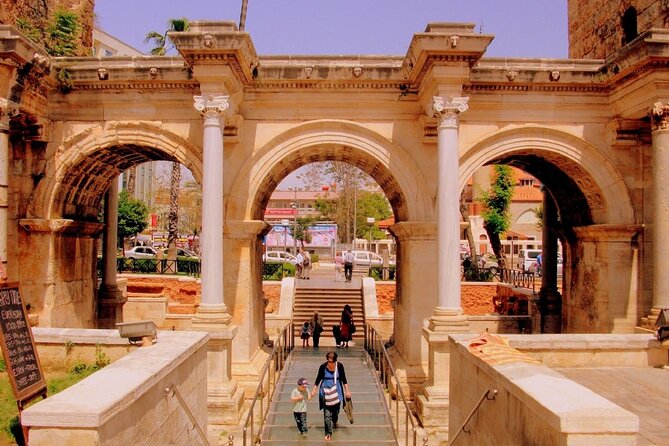
You’ll finish at Hadrian’s Gate (Hadrian Kale Kapısı), at the end point listed near Atatürk Cd, in Barbaros. That end location is useful because it’s central. After the walk, you’re not stuck far from dinner areas or your next activity—you’re dropped at one of the best-known landmarks in town.
You’ll also get a mobile ticket, and the tour is offered in English. The group stays small (up to 15 travelers), and service animals are allowed.
Stop 1: Saat Kulesi and the first look at Kaleiçi’s story
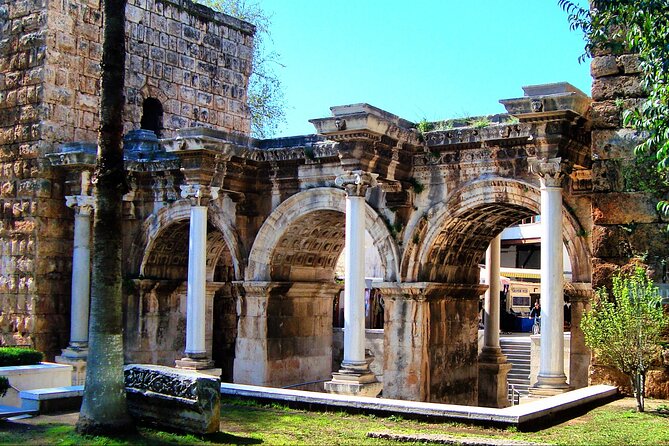
You begin at Antalya Saat Kulesi, the clock tower by the old-town lanes. This first stop is more than a photo moment. It’s where the guide typically sets the stage: how Antalya developed, why this area became the city’s historical heart, and what you’ll be looking for as you walk.
From there, you head into the old streets at a human pace—exactly the kind of start that helps the rest of the tour land. Without context, the neighborhood can feel like a maze of stone and curves. With a quick beginning narrative, it turns into a map in your head.
Stop 2: Yivli Minaret (Yivliminare Cami) and its fluted geometry
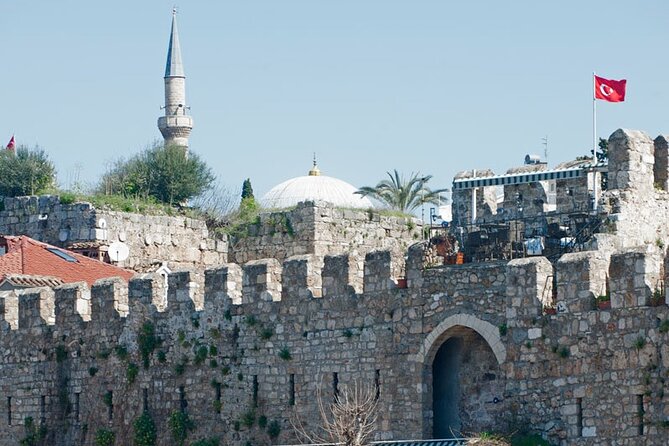
Next comes Yivliminare Cami, famous for its fluted minaret and the mosque complex around it. The guide’s role here is key: they point out what makes the architecture distinctive and how such landmarks fit into Antalya’s changing layers of history.
This is one of those stops where you’ll notice details more than distance. Even if you’ve seen minarets before, the fluted shapes and the surrounding madrasah feel very Antalya—especially when you understand the function of these structures in their time, not just the pretty silhouette.
Stop 3: Walking from Yivli to Karatay Madrasah
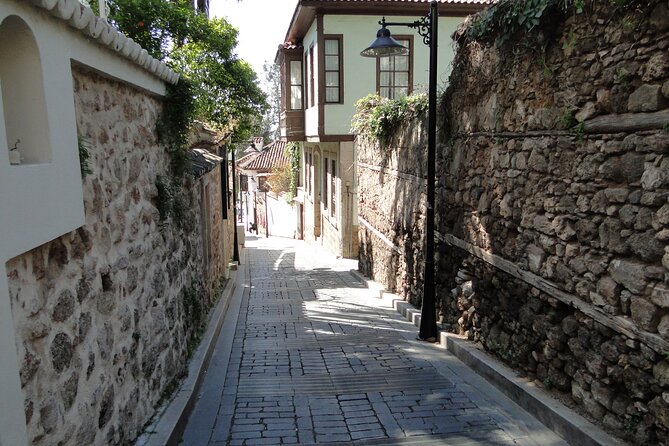
After the minaret complex, the walk continues toward Karatay Madrasah. This section is part of what makes the route feel “local taste” rather than just sightseeing checklists: you’re moving through the neighborhood as a neighborhood, not as a theme park.
Madrasahs can seem like just another old building until you connect them to how people studied, learned, and lived around them. If you like history that explains everyday life—not only rulers and dates—this is the point where the tour starts to click.



Stop 4: Kırkmerdiven Sokak and the Forty Stairs shortcut
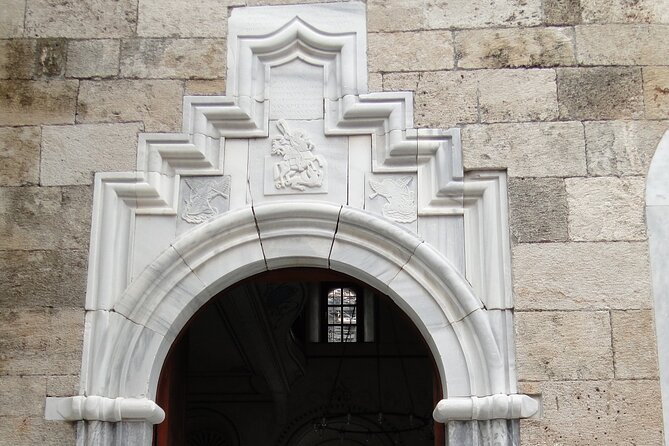
Then you pass Kırkmerdiven Sokak, the historic Forty Stairs shortcut. This isn’t just a dramatic street name. It’s a real clue to how people got around the city’s slopes and elevations over time.
You’ll likely pause for a few photos here because the street twists and the view lines change as you move. It’s also a nice “break in the rhythm.” After structured landmarks, a shortcut street feels like you’re walking through the city the way locals might have.
Stop 5: Kaleiçi Marina and ancient harbor walls
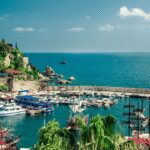
From the stairs, you shift to the ancient harbor area—starting with the Kaleiçi Marina. Here you’ll see protection walls of the port and the harbor’s working atmosphere, plus boats out on the water.
What I like about this stop is the combination: ancient structures plus modern day-by-day use. You’re not staring at ruins in a vacuum. You’re seeing the bay as it’s been used for arrival, trade, and travel for a long time—now with a Mediterranean view and mountains framing the scene.
Stop 6: Mermerli Beach for that classic Old Town viewpoint
Next you reach Mermerli Beach, a favorite photo spot. The best part isn’t the beach itself; it’s the vantage point. From up top, you get views over the old harbor and the water, which makes this stop a strong “single frame” moment for postcards and memory photos.
It also works as a small reset. Even with a small group, walking can stack up. This stop gives you a chance to stand, look, and let the guide’s details catch up while you take photos.
Stop 7: Antalya Ethnografya Muzesi and Ottoman daily life in rooms
The tour’s biggest indoor segment is Antalya Ethnography Museum. It’s set inside a historic Ottoman-period mansion, and the standout here is how everyday life is presented.
You’ll see objects linked to daily routines across different rooms. You’ll also notice animations that help turn static displays into stories—especially around home life and Yörük life, which is described as a meaningful part of Antalya’s culture.
This museum stop is often the moment people remember because it connects architecture and street walking to real human routines. You don’t just learn what buildings were for. You learn what life looked like inside those buildings and along those routes.
Stop 8: Kecili Park for harbor views and a quick balcony moment
From the museum area, you head to Kecili Park, a tiny lookout spot over the historic harbor. It’s short but sweet: you get big views over the bay, plus the chance to take photos from a balcony-style angle.
If you’re photographing, this stop is practical. The lighting and angles from a viewpoint tend to give you more variety than the street-level shots. And if you’re not into photos, it’s still worth it for the “pause and look” break.
Stop 9: Hıdırlık Tower—Roman-era watchtower on city walls
Next is Hıdırlık Tower, a cylindrical tower on the city walls. It’s described as built in the 2nd century, and thought to have been associated with the Roman emperor Hadrianus.
The key ideas your guide should cover here are the tower’s purpose and location: it functioned as a lighthouse and watchtower for ships arriving in the bay. You’ll also learn about a small room downstairs and how stairs lead upward, plus the mention of fresco remains connected to interpretation by some sources.
Even if you don’t care about every architectural term, this stop gives you a “why it mattered” moment. It’s easy to see the Old Town as romantic scenery. This tower reminds you it was also a defensive, navigational part of the city.
Stop 10: Hesapçı Sokak—narrow lanes with fruit trees and jasmine
Now comes Hesapçı Sokak, described as a street with the mystical feel of history. This is where the Old Town starts to smell and look like itself: narrow streets, bay windows, stone houses, and plants like bougainvillea and jasmine.
The street is also known for where you’ll find bars, restaurants, and souvenir vendors—the main “calculate and compare” strip for many visitors. That makes it useful even after the tour ends. Once you’ve walked it with the guide, you’ll know where the energy is concentrated.
Stop 11: Milklaç Işıklar halva tasting and the sweet finish
The tour ends at Milklaç Işıklar, a local dessert stop. You’ll have semolina halva (irmik helvasi) tasting as a included snack.
The tasting is served with ice cream, tahini, and peanut—a combo that makes the sweetness feel balanced instead of just heavy. Many people treat this as a punchline to the history walk, and it works. You finish thinking about everyday Ottoman-style food, not only stone and towers.
The Önder factor: why this tour feels personal
The biggest compliment across the notes is about the guide—Önder. His style shows up again and again: clear English, lots of small historical tidbits, and a pace that keeps questions flowing.
People also highlight that he helps you understand how the Old Town fits together. One reason this matters: Kaleiçi is compact, but it’s not obvious at first. After this walk, you’re better at choosing where to return for sunset photos or where to focus if you only have half a day.
There’s also a thread of personality in the feedback. Some notes mention a retired school teacher background, others mention an art teacher angle—either way, it comes through as teaching style rather than lecture style. If you’re the type who likes asking why things were built a certain way, this tour gives space for that.
Timing, weather, and what to do before and after
This starts at 4:00 pm and lasts roughly 2 hours 30 minutes to 3 hours. That timing is good for finishing your day with dinner plans near major landmarks. It also lines up with a more comfortable walking rhythm for many people.
Weather matters. The experience requires good weather, and there’s a plan for poor conditions (either an alternate date or a full refund). So if you’re traveling during a season with sudden rain, check the day-of.
What to pack is simple: closed-toe shoes you can trust on uneven stone, and a water plan. You’ll move through streets, stair segments, and viewpoints—short stops, but still a real walk.
Who this tour is best for (and who should skip it)
This tour is a strong fit if:
- You want an organized way to see Kaleiçi without getting lost.
- You like photo stops tied to actual history, not random “look at this wall” moments.
- You enjoy museum visits where the guide explains the setting and meaning.
You might think twice if:
- You can’t comfortably walk for about three hours on mixed pavement and stairs.
- You need lots of long breaks. The stops are short by design, because the value is in the route.
If you’re traveling solo, a small group still keeps it friendly. If you’re traveling as a couple or with family, the structure helps keep everyone engaged—there’s room for questions, and the pace adapts to the group.
Should you book this Old Town tour?
I’d book it if you’re coming to Antalya for the first time and want a confident base for the rest of your stay. The mix of clock tower, major landmarks like Yivli Minaret, harbor scenery at Kaleiçi Marina and Mermerli Beach, plus the museum’s Ottoman-room storytelling makes the 2.5–3 hours feel like good use of your day.
Even if you’ve visited before, it can still be useful. This is the kind of tour that improves your self-guided wandering afterward—especially because the route teaches the neighborhood’s logic, not just its highlights.
FAQ
What is the tour length?
It runs about 2 hours 30 minutes to 3 hours.
Where does the tour start and end?
It starts at Antalya Clock Tower (Saat Kulesi) near Tuzcular, İmaret Sk., Antalya, and ends at Hadrian’s Gate (Hadrian Kale Kapısı) near Barbaros, Antalya.
Is the tour in English?
Yes, the tour is offered in English.
What’s included in the price?
The price includes a semolina halva tasting (irmik helvasi) served with ice cream, tahini, and peanut.
Is the museum included, and is admission free?
The Antalya Ethnography Museum stop is part of the tour, and the listed admission for the tour’s stops is free.
What happens if bad weather cancels the tour?
The experience requires good weather. If it’s canceled due to poor weather, you’ll be offered a different date or a full refund. You can cancel for a full refund up to 24 hours in advance.