REVIEW · SIDE
Ancient Perge, Aspendos Amphitheater & Manavgat Waterfalls Tour
Book on Viator →Operated by Tourmania · Bookable on Viator
Perge and Aspendos feel like movie sets you can walk through. This day trip from Side strings together Roman-scale sights, then cools things down at the Manavgat Waterfalls. It’s the kind of plan that saves your energy: you get hotel pickup, a guide who keeps the story clear, and just enough time at each stop.
What I really like is the focus. You start at Perge Antik Kenti, a place with a big 15,000-person theater and a planned grid of streets that makes it easy to understand how the Romans ran a city. Then you move to Aspendos, where the Roman amphitheater from 155 AD is still doing what it did almost two thousand years ago.
One possible drawback: the bus ride can be hot. I’ve heard about substandard AC in the vehicle, so I’d bring a light layer and something small to stay comfortable.
In This Review
- Quick hits to know before you go
- Perge Antik Kenti: Roman scale with a Bronze Age spine
- Aspendos Ruins: the Köprüçay setting and the Roman machine still intact
- The Aspendos amphitheater: why this one still feels alive
- Lunch at the Aspendos stop: simple, filling, and timed right
- A break in Antalya: shopping time with a clear purpose
- Manavgat Waterfalls: the cooling finish after ancient stone
- Price and logistics: when $41.50 actually makes sense
- Who should book this Perge–Aspendos–Manavgat tour
- Should you book this tour
- FAQ
- What time does the tour start?
- How long is the Ancient Perge, Aspendos Amphitheater & Manavgat Waterfalls tour?
- Is hotel pickup included?
- How much does the tour cost?
- Is lunch included?
- Are entrance fees included?
- Do I need a paper ticket?
- What is the group size?
- Is the bus ride air-conditioned?
- Is there free cancellation?
- FAQ
- Do I need a certain fitness level?
- Is the tour dependent on weather?
Quick hits to know before you go
- Hotel pickup from Side helps you avoid wasting your morning
- Ozzy the guide keeps things funny, clear, and moving
- Perge’s theater and long main street are easy to picture as you walk
- Aspendos amphitheater still in use makes the scale feel real
- Lunch is included and served at a spot with a nice view
- Manavgat Waterfalls at the end gives you a refreshing wind-down
Perge Antik Kenti: Roman scale with a Bronze Age spine
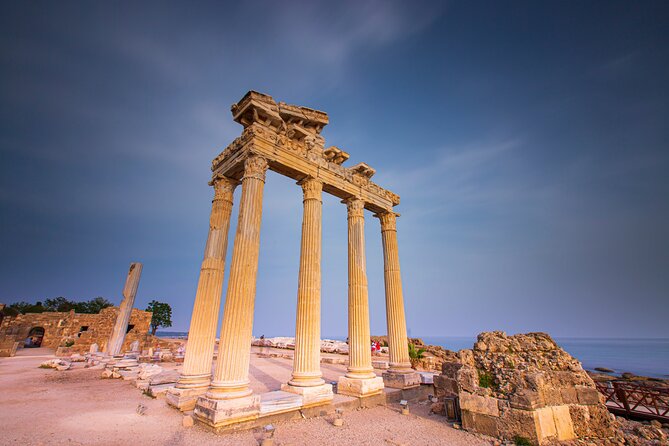
Perge is in the Aksu district, about 17 kilometers from the city center. The site matters because it wasn’t a random stop for the Romans. Perge had earlier roots too, and its planning shows how power and culture got organized over time. It’s also a sculpture city. Many of the marble pieces you see associated with Perge end up displayed in Antalya’s museum collections.
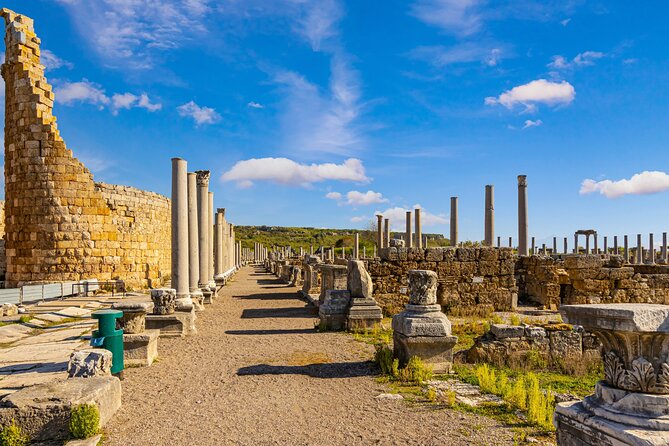
When you arrive, you’re walking into a layout that makes sense. The city plan is based on two main streets running east–west, plus another set running north–south. That grid helps you connect the dots fast, instead of feeling lost in ruins.
Your time here includes a close look at major structures, including a theater with a capacity of around 15,000 people that’s described as well preserved. You’ll also see a double-storey building (noted as M.S., built in the 2nd century). This is the kind of detail that helps the ruins feel less like rocks and more like an actual working city.
Perge’s main street is another highlight. The idea is a long stretch (noted as about 500 meters) lined with columns and fountains, with an acropolis dating back to the Bronze Age. Even if you’re short on time, that mix of eras is what makes Perge worth the stop: you’re not just seeing Roman buildings—you’re seeing how long this landscape stayed important.
Practical note: the full experience depends on walking comfort. There’s a bit of movement over uneven ground and up-and-down steps. With moderate physical fitness, you’ll be fine, but don’t plan this like a stroller-friendly stroll.
You can also read our reviews of more tours and experiences in Side.


Aspendos Ruins: the Köprüçay setting and the Roman machine still intact
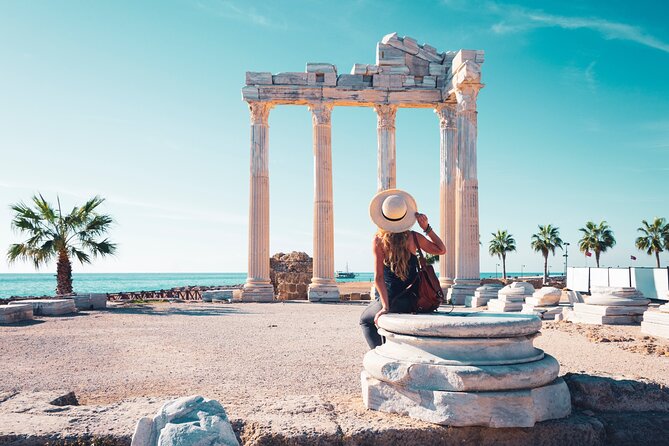
After Perge, the day shifts toward Aspendos, which sits by the Köprüçay River. Aspendos was one of the important cities in Pamphylia, and today it’s known for its Roman monuments—especially the amphitheater built in 155 AD. Even if you’ve seen amphitheaters before, this one lands differently because it’s still so intact.
I like Aspendos because it’s not one single photo stop. You get a sequence of highlights: the amphitheater, plus nearby structures like a stadium, Roman gates, city walls, and Roman baths. That “whole district” feeling matters. It’s easier to understand the city’s rhythm when you see more than one wall and a doorway.
One of the most helpful waypoints is the long main street. It’s described as about 500 meters with columns and fountains. As you walk it, you can start to picture how people moved through the city—where public life happened and where monumental power got displayed.
Also, the site includes an acropolis dating back to the Bronze Age. So even at Aspendos, you’re not only looking at Roman engineering. You’re seeing how older layers shaped the placement of newer ones.
Timing is the tradeoff. You don’t get all day here, so prioritize what you personally want most. If you love theaters and stadiums, focus your energy on the amphitheater area and take your time looking at the structure. If you like mosaics and detailed architecture, use your time to slow down during the main street walk.
The Aspendos amphitheater: why this one still feels alive
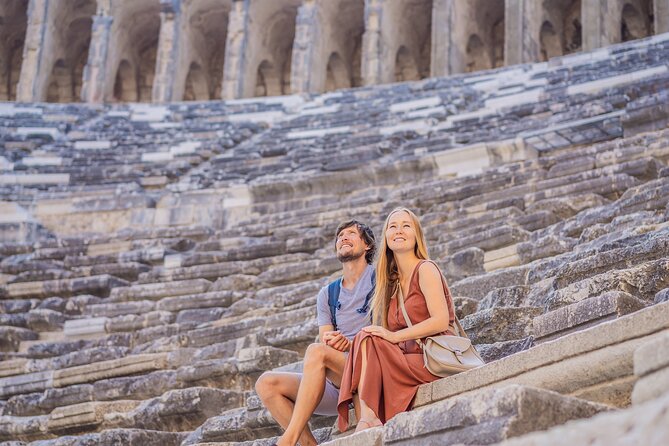
Aspendos amphitheater is the star, and it earns the attention. The big point isn’t just size. It’s the fact that it’s described as excellently preserved and still in use. That changes the whole feeling. Standing inside, you get a stronger sense of acoustics and audience flow than you would at a fully collapsed ruin.
You’ll also notice how everything feels designed for viewing. Rows step up with clear geometry, and the surroundings reinforce that this was built for spectacle. Add the surrounding monumental context—gates, walls, and other site structures—and the amphitheater feels less like an isolated object and more like the core of a town.
Bring sun protection. Even with a guided plan, you’ll be exposed during the open-air sections. A hat and water go a long way.
Lunch at the Aspendos stop: simple, filling, and timed right
Lunch is included at an Aspendos restaurant stop, with about an hour provided. I appreciate how this is built into the day. You’re coming off solid walking time at the sites, and the lunch break gives you a reset before any longer return drive.
The meals are described as simple but tasty, and the setting can be pleasant with nice views. It’s not the type of lunch you remember because it was fancy. You remember it because it’s good, it hits the right moment, and you’re not hungry enough to miss the next sites.
If you’re sensitive to heat, use this time to cool down, refill water, and take a slow breath before you head back out.
A break in Antalya: shopping time with a clear purpose
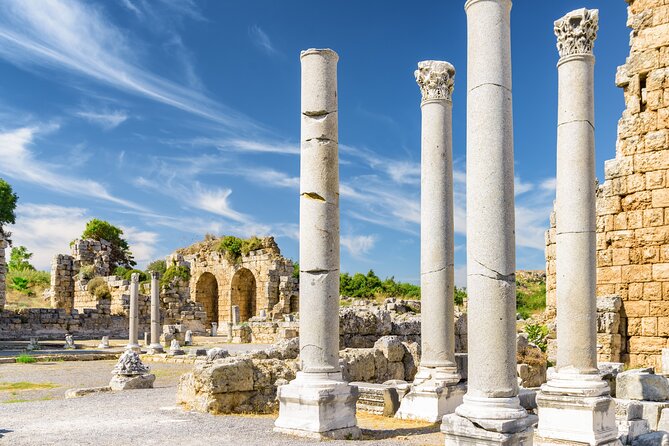
In the middle of the day, there’s a break in Antalya at a jewelry fabric and store stop. It’s listed as an admission-free stop and lasts about an hour.
How to use this without wasting time: treat it like a leg-stretcher. If you want to browse, you’ll have space to do that. If shopping isn’t your thing, stay practical—use the hour for a bathroom break, quick snack or water refill if you need it, and get ready for the final nature stop.
This stop can be hit-or-miss depending on your style. The best approach is to decide in advance whether you’re there to browse or just to rest your feet.


Manavgat Waterfalls: the cooling finish after ancient stone
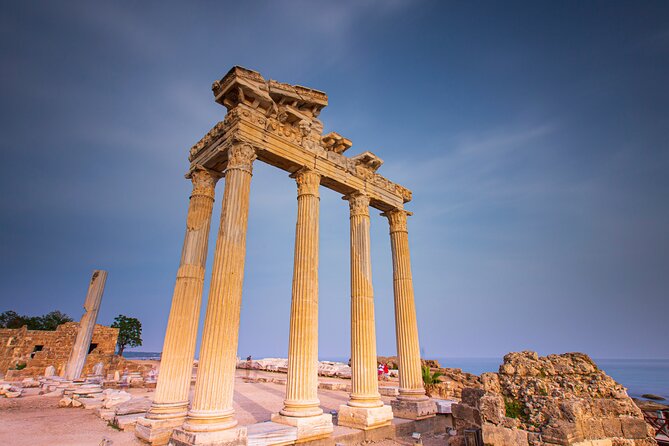
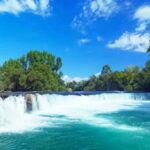
Manavgat Waterfalls are the final stop on the way back toward Side. This part works because it changes the mood. After amphitheaters and street layouts, you get green surroundings, fresh air, and that pine scent described in the day’s notes.
You’re given about an hour here. The plan is designed for relaxing—people even take a soak when the conditions allow, since the atmosphere is cooler near the water. It’s one of those places where your photos won’t fully explain it, because the sound and mist do a lot of the work.
Practical tip: wear footwear that can handle damp areas. If you’re thinking of getting near the water, plan for wet ground and slippery edges.
Price and logistics: when $41.50 actually makes sense
This tour costs $41.50 per person, and it’s typically booked about 10 days ahead. You’re looking at about 10 hours total, starting at 8:00 am, with hotel pickup and drop-off from Side and travel in an air-conditioned bus.
Here’s the value math in plain terms:
- You’re paying for a guide, transportation, and lunch.
- Entrance fees may be extra. The information provided says entrance fees are included if you choose that option, and also lists entrance fees around 30€ per person otherwise.
- Since the sites are major Roman and ancient landmarks, entrance costs can add up fast. So check what’s included in your specific booking before you go.
The group size is capped at a maximum of 15, which is a real plus. Small groups tend to move better through sites, and it’s easier for your guide to keep track of timing.
One logistics note I’d take seriously: moderate physical fitness is recommended. That’s fair. You’ll walk, and you’ll be dealing with steps and uneven ground at historic sites. It’s not a “sit the whole day” experience.
And yes, the bus comfort question matters. I’ve heard about substandard AC. If you run hot, dress in light layers and plan to cool down during the lunch and waterfall stops.
Who should book this Perge–Aspendos–Manavgat tour
Book it if you want a structured day that covers two top-tier Roman sites plus a nature reset at the end. It’s a strong fit if you like:
- Roman architecture and theater-scale ruins
- A guided explanation that helps you connect buildings to city life
- Hotel pickup so you don’t have to coordinate transport
Skip it or rethink it if:
- You’re very sensitive to heat on long drives (bus AC can be an issue)
- You want more free time at fewer sites, not a full circuit
- You’re expecting all entrance fees to be included automatically (they may be an add-on)
The guide experience is a major part of why this day feels smooth. With Ozzy specifically noted as funny and informative and someone who takes care of the whole day, the pacing matters more than you might think. Good guiding turns a schedule of stops into a story you can follow.
Should you book this tour
If you’re short on time in the Side area and you want a high-impact day, I’d book it. The combination is practical: Perge gives you the Roman city plan and major ruins, Aspendos gives you the amphitheater experience, and Manavgat Waterfalls ends the day with a cooling change of scenery. With lunch included and a small group size, it’s a good value way to see a lot without planning every detail.
Just be honest about comfort. Pack for heat, plan for walking, and double-check entrance fee coverage before you depart. Do that, and you’ll end the day with big-stone memories and wet-weather refreshment.
FAQ
What time does the tour start?
The tour starts at 8:00 am.
How long is the Ancient Perge, Aspendos Amphitheater & Manavgat Waterfalls tour?
The duration is listed as about 10 hours.
Is hotel pickup included?
Yes. Hotel pickup and drop-off are included, with pickup from your hotel in Side.
How much does the tour cost?
The price is $41.50 per person.
Is lunch included?
Yes. Lunch is included as part of the tour.
Are entrance fees included?
Entrance fees may be included if you select the option that covers them. Otherwise, entrance fees are listed as 30€ per person.
Do I need a paper ticket?
No. The tour uses a mobile ticket.
What is the group size?
The tour has a maximum of 15 travelers.
Is the bus ride air-conditioned?
The description says you travel in an air-conditioned bus, though comfort can vary.
Is there free cancellation?
Yes. Free cancellation is available, and you can cancel up to 24 hours in advance for a full refund.
FAQ
Do I need a certain fitness level?
The tour notes a moderate physical fitness level is recommended.
Is the tour dependent on weather?
Yes. It requires good weather, and if it’s canceled due to poor weather, you’ll be offered a different date or a full refund.